When love is not enough
On Kiki’s Delivery Service, creative labor and burnout, and love

In the days following the election, among electoral analyses, anger, and apathy, I saw a set of stills from Twin Peaks circulating. I’ve only ever watched one episode with a friend, so I didn’t recognize the characters or episode, but, like many pieces of art, I felt it recognized something in me:
Windom Earle: Garland, what do you fear most in the world?
Garland Briggs: The possibility that love is not enough.
I often think about the limits of love when stacked against violent institutions and systems of power, against active malice, against cold, distant uncaring. There is so much that love can offer and sustain us through, but I am increasingly convinced that it is not merely a possibility that love is not enough; it is, in many cases, a reality. My fear is that, one day, I will no longer think it is worth it to love anyway.
These days, I’m less interested in love as a sentiment and more interested in love as a directional force of motion. It is easy to feel strongly; it is harder to act. But love gives us a reason and a will to do so anyway.
Recently, a friend asked me to contribute a few paragraphs for a video essay they’re working on about labor organizing. I asked to write about Kiki’s Delivery Service, and in the process, I realized I was writing about love.
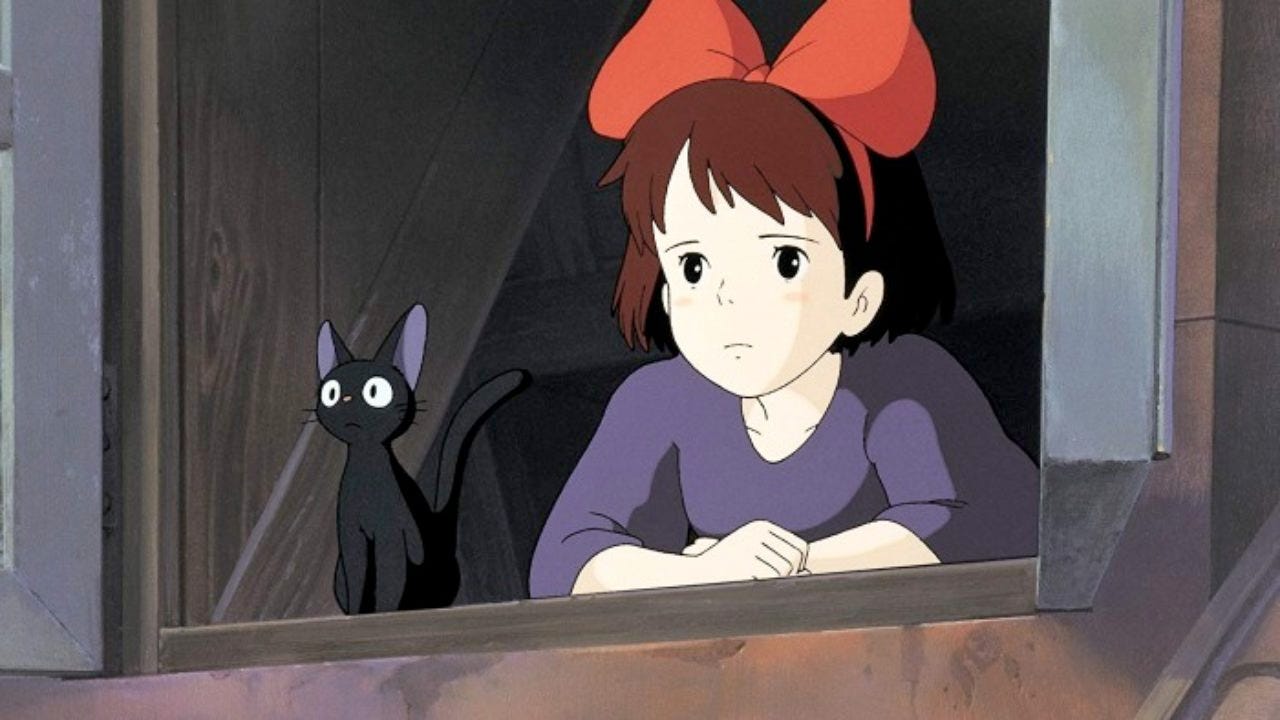
Kiki leaves home when she turns 13 to hone her witchcraft, and to make ends meet, she begins a flying delivery service. But after a series of disheartening experiences working in a new city, she loses her witch’s powers, unable to fly or communicate with her cat companion, Jiji. In this grounded and dejected state, Kiki visits Ursula at her cabin, where she sits to pose for one of Ursula’s paintings and confides that:
Flying used to be fun until I started doing it for a living … Without even thinking about it, I used to be able to fly. Now I’m trying to look inside myself to find out how I did it. But I just can’t figure it out.
To which Ursula tells her simply: Stop forcing it.
Take long walks. Look at the scenery. Doze off at noon. Don’t even think about flying. And then, pretty soon you’ll be flying again.
She goes on to explain that she struggled most when “I hadn’t figured out what or why I wanted to paint. I had to discover my own style … [W]e each need to find our own inspiration, Kiki. Sometimes it’s not easy.” I’ve often seen this scene cited as a message of compassionate permission, forgiveness, and self-trust. Find your own reasons for creating art (or practicing magic), take breaks when your spirit falters, and trust that it will return. It’s one of the most explicit moments in the movie in its critique of capitalism, of the way artists are forced to transform their creative labor into a product, of the deep alienation and depression that ensues.
Ursula’s advice, though kind and gentle, feels limited in its individualism. Taking a walk may help clear one’s head—the habit often appears in the biographical lore of famous writers and artists, so at the very least it has correlation on its side—but it is only temporary respite against the system of capitalism. There’s a growing popularity of individual rebellion—anticonsumption, quiet quitting, self-care—that this advice aligns with. To a degree, it makes sense. Capitalism feels so gargantuan, so entrenched, that small rebellions are better than nothing. But the movie doesn’t end at Ursula’s cabin. Instead, it offers another solution beyond reclaiming moments of time here and there: loving your friends and receiving their love in turn.
After spending time with Ursula, Kiki returns to the city and is called upon by an older woman for whom she delivered a pie earlier in the movie. But this time, she walks to the house instead of flying. And this time, the old woman has a gift for Kiki: a homemade chocolate cake to thank her for her previous help. While there, a news broadcast reveals that Kiki’s friend, Tombo, is in danger. He’s hanging on for dear life to a dirigible that is on a collision course with a clock tower, and as Kiki runs into the city center, she realizes the only way she’ll make it in time is if she flies.
And for a moment, the sounds of sirens, of the T.V. announcer, of the crowds, stop. Small currents of wind appear around her feet as people watch, and then it happens. She flies. Her frantic dash towards Tombo is edited with cuts of friends she’s made along the way cheering her on as they watch the broadcast. She rescues Tombo in the final moments before he hits the ground, and as newscasters and emergency care workers swarm them, Jiji jumps up on her shoulder and meows.
People disagree about whether this means she’s lost her ability to speak with Jiji forever or if, like flying, it will come back one day. One friend told me that this detail ruined the end of the movie for him because the prospect of Kiki losing her connection with her cat companion is disproportionately sad compared to the rest of the ending. But to me, an ending where Jiji speaks again would have felt too neat, made the love exchanged feel transactional towards the goal of rekindling her witch’s powers. Ursula invites Kiki to the cabin and the old woman bakes her the cake without knowing whether it will help her fly again. Kiki runs to save Tombo without knowing whether the love she has for her friend will be enough. But she does it anyway.
I’ve spent a lot of time in the last week and change talking to friends about the election. Though there have been differing degrees of anxiety and frustration and despair, there has been a consistent sentiment of needing to do something, often accompanied by uncertainty about what that will be. Though it seems clear that love—for our friends, our communities, our fellow workers—must underpin it, it is less clear which direction, which path, which cause will be the right one to sink our time and efforts into. If only someone could assure us that our choice is correct. But there is no such being, and there is no guarantee. There is only love and what we choose to do with it.
Personal updates:
It’s National Adoptee Awareness Month, and my letter/essay, “Reaching,” was recently published in The Rumpus’ Letters to Adoption series! You can read it here and follow along as they publish more letters throughout November.
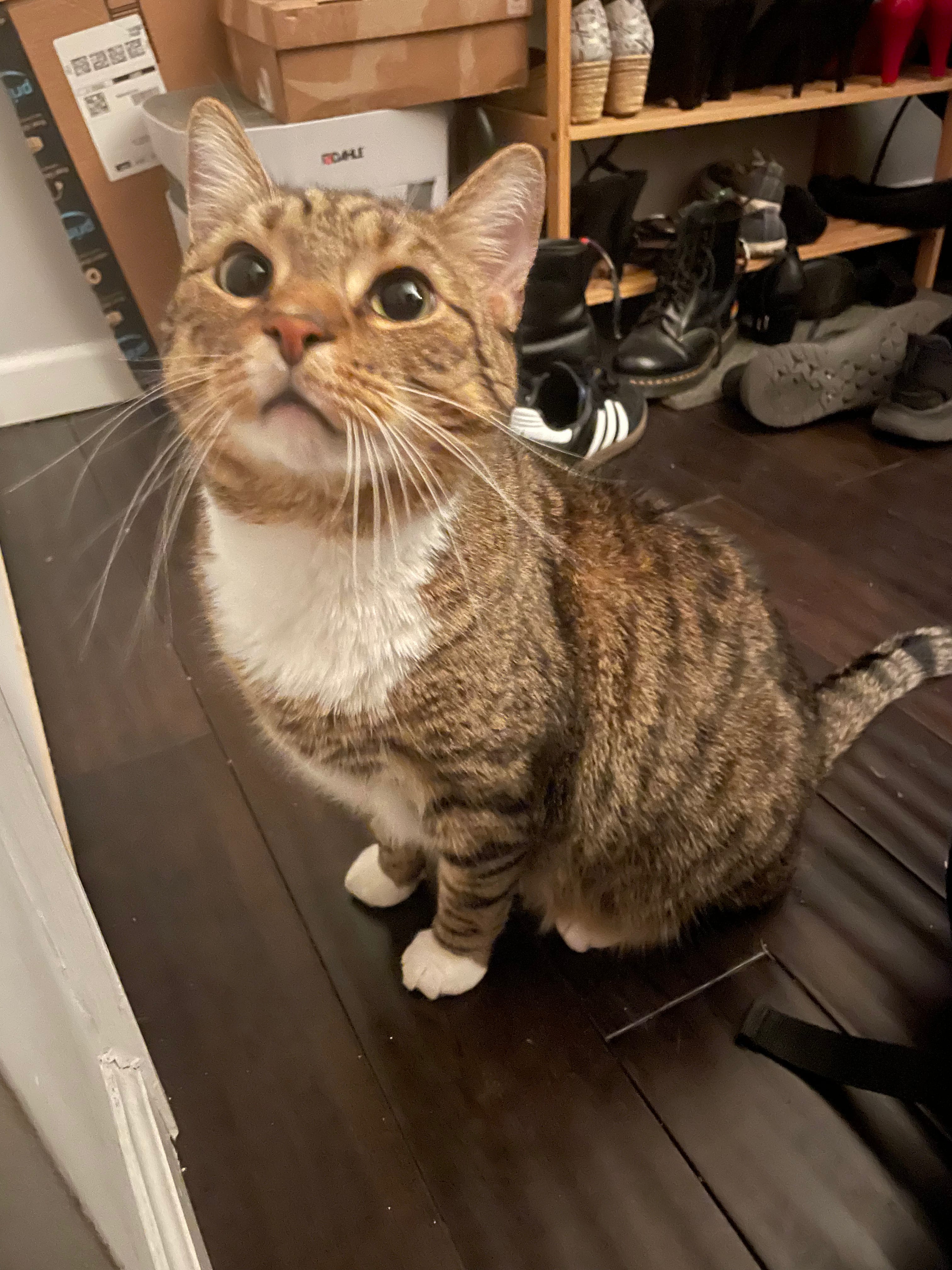
Toaster has been struggling with the end of daylight savings time. He was born in May, so I think he has a harder time in the off season.